Time Exchange: Building a Community-Driven Platform
What if time was a currency? The Time Exchange project began with a simple yet powerful idea: to create a platform where people could trade skills and services without money—only time. This initiative brings together NGOs, tech teams, and universities to build a system that fosters mutual aid, community connection, and sustainable engagement.
Our goal was to design a warm and intuitive experience where users could easily connect, offer help, and build meaningful relationships—all while exchanging time as a valuable resource.
To bring this vision to life, we needed a structured approach to align our diverse stakeholders. That’s where Design Sprints came in.
Design Sprints: Aligning Vision & Mapping the Experience
"To align six stakeholders across NGOs, tech teams, and universities, I led three Design Sprint workshops inspired by Jake Knapp’s methodology. These sessions helped us define user needs, structure the platform experience, and prioritize features for development. The goal was to create a time exchange platform imbued with warmth and community, where users can easily connect, offer help, and build ongoing engagement."

Workshop 1: Defining Users & Project Goals
🕒 3-Hour Online Session
In our first workshop, we aligned stakeholders on the platform’s core purpose, success metrics, and user needs. Through collaborative discussions, we defined key brand attributes and addressed strategic challenges.
💡 Core Brand Attributes
✅ Community-driven – Fosters a culture of giving and receiving help.
✅ Seamless & intuitive – Users should instantly find the support they need.
✅ Engaging & rewarding – Encourages long-term participation.
🎯 Key Outcomes
✔ Unified Vision – Ensured all stakeholders shared a clear understanding of the platform’s goals.
✔ User-Centered Approach – Gathered user stories from NGOs to define real-world needs.
✔ Strategic Direction – Answered critical questions to guide development:
- How do we define success for the platform?
- How do we attract users and build engagement?
- How might we streamline collaboration for greater efficiency?

Workshop 2: Mapping Users & Flows
🕒 User Experience & Journey Mapping Session
In this session, we focused on understanding user interactions by identifying key user personas, mapping their journeys, and structuring core platform flows.
👥 Key Outcomes
✔ Target Users Defined – Identified core user types from each NGO.
✔ Journey Mapping – Created 6 detailed journey maps covering different user roles & interactions.
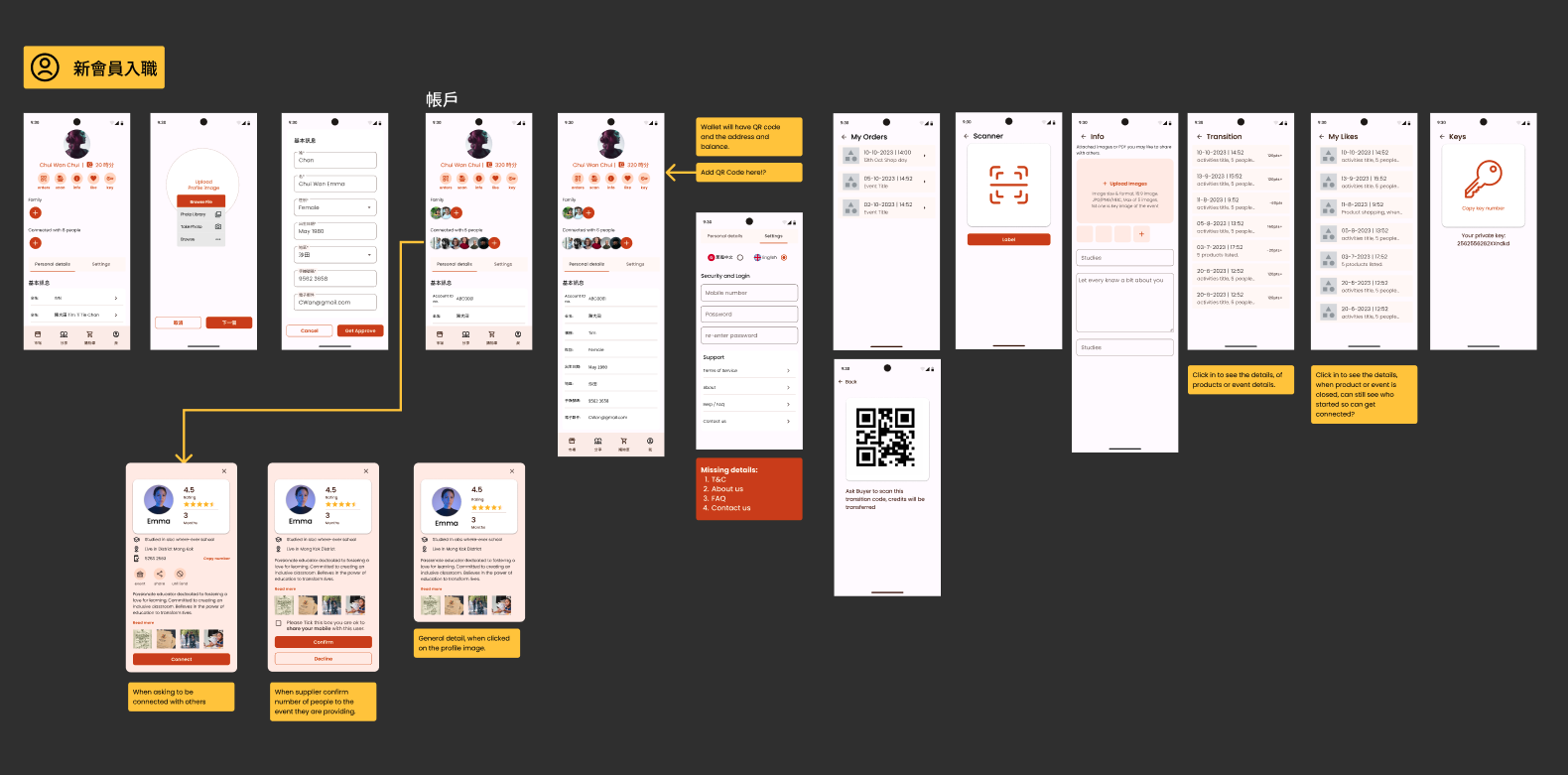
✔ Structured Core Flows – Designed essential platform experiences:
- Supplier & Demander Flow – The step-by-step process of skill exchanges.
- Marketplace & Monthly NGO Shop Flow – How users navigate and participate in the marketplace.
- Admin Dashboard – Managing events, memberships, and platform engagement.

Workshop 3: Sketching & Ideation
📝 Turning Ideas into Actionable Designs
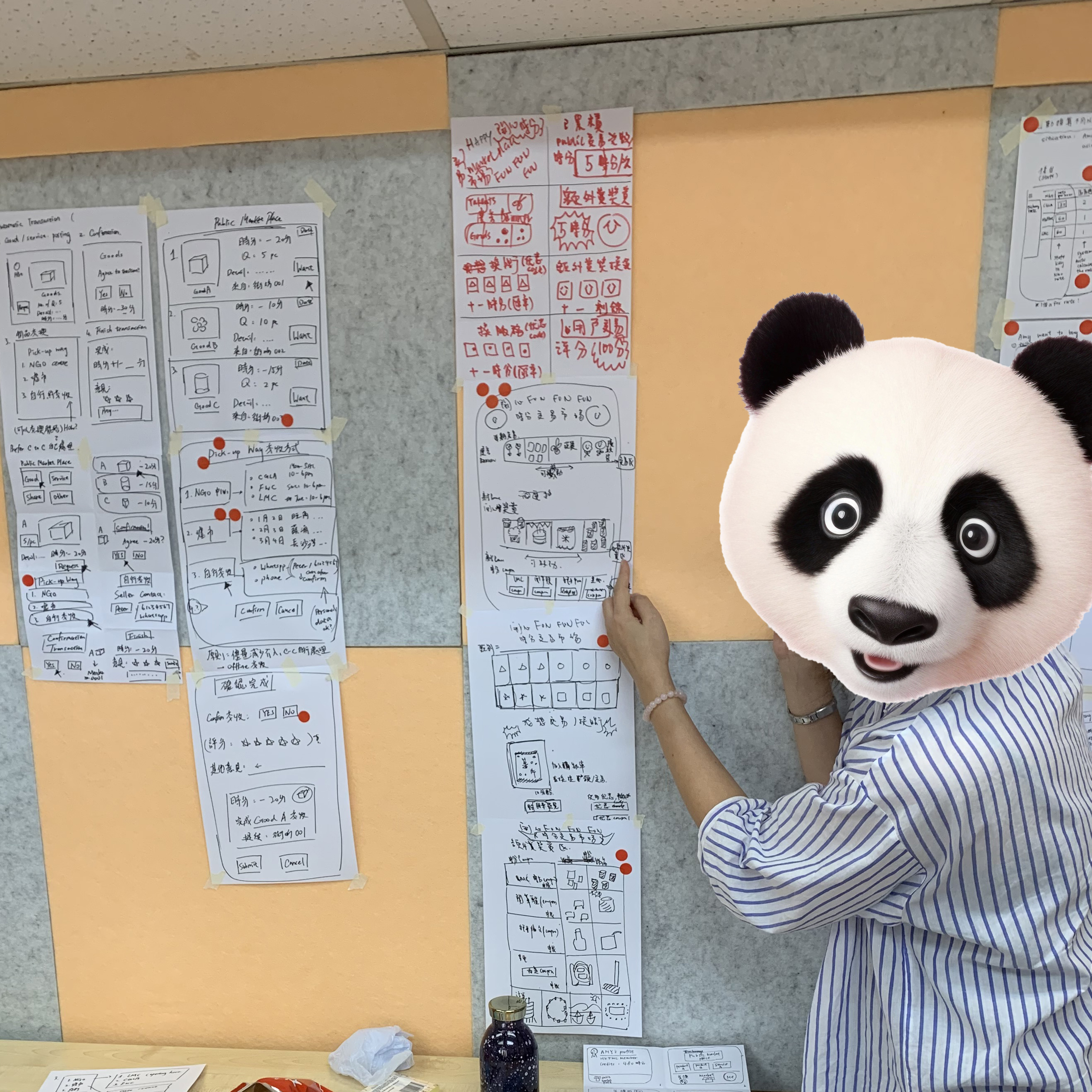
In this session, we ran a Crazy 8s sketching exercise to rapidly explore and visualize feature ideas. Stakeholders contributed diverse perspectives, helping us shape the core user experience.
🎯 Key Outcomes
✔ Divergent Thinking & Rapid Ideation – Explored a variety of feature ideas through quick sketches.
✔ Prioritized Core UX Flows for Development:
- Time Exchange Interactions – Designing a smooth and intuitive process for skill-sharing.
- Marketplace Redemption Process – Ensuring seamless exchanges within the platform.
- Admin Dashboard Management – Structuring tools for efficient event and member oversight.
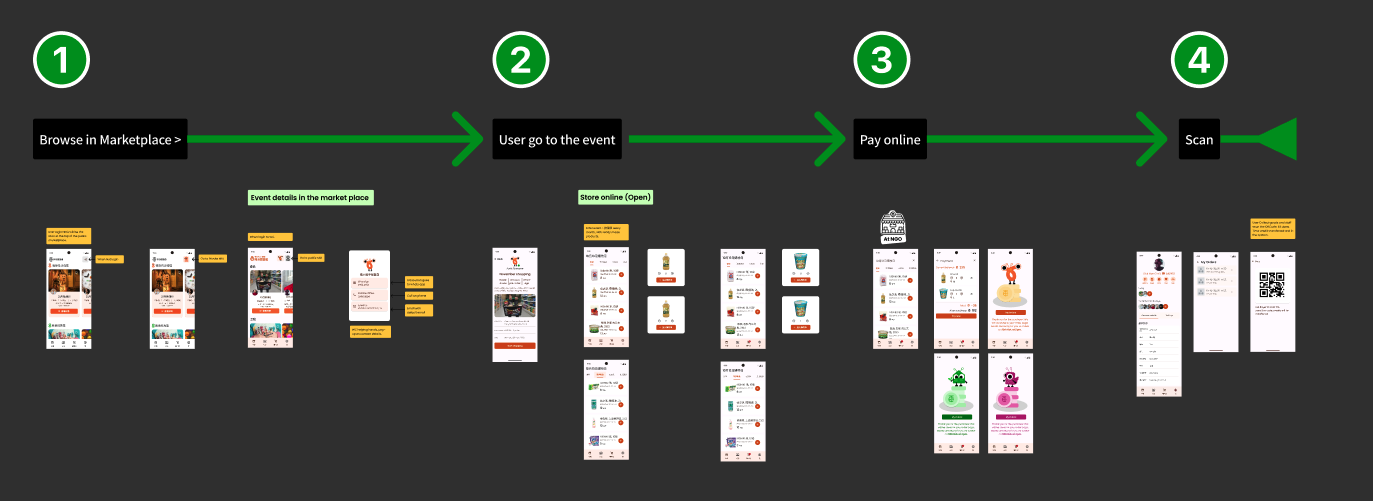
✔ The Marketplace: The Central Hub for Users – Upon logging in, users land on the Marketplace, where they can: - See all available events happening across three NGO locations.
- Join events, provided they are registered with at least one NGO.
- Explore time exchange opportunities, fostering cross-community engagement.
These workshops aligned stakeholders and transformed research into a structured UX strategy. The final design integrates a supplier-demand flow, a skill-exchange marketplace, and an admin dashboard, ensuring seamless engagement and collaboration across all three NGOs. With this foundation in place, I moved forward with wireframing, user testing, and crafting three distinct stylescapes to define the brand identity for this project.
Prototyping & Testing: Bringing the Vision to Life
💡 Since usability testing wasn’t part of the Design Sprints, I introduced it in the next phase to validate and refine the platform experience.
📌 Key Steps Post-Workshops:
✔ Built Low-Fidelity Wireframes – Structured the platform experience in Figma to test core user flows.
✔ Developed Interactive Prototypes – Enabled real users to navigate and interact with the platform.
✔ Conducted Usability Testing – Gathered feedback to:
- Refine navigation for better user experience.
- Improve clarity in the skill-exchange process.
- Optimize the admin dashboard for event and member management.
YouTube Caption (User Testing with Elderly Users)
A muted YouTube video showcasing usability testing with elderly users, where we conducted five rounds of testing to refine the app’s accessibility and ease of use.
Smart QR Code System for Fair Distribution & Impact Analysis
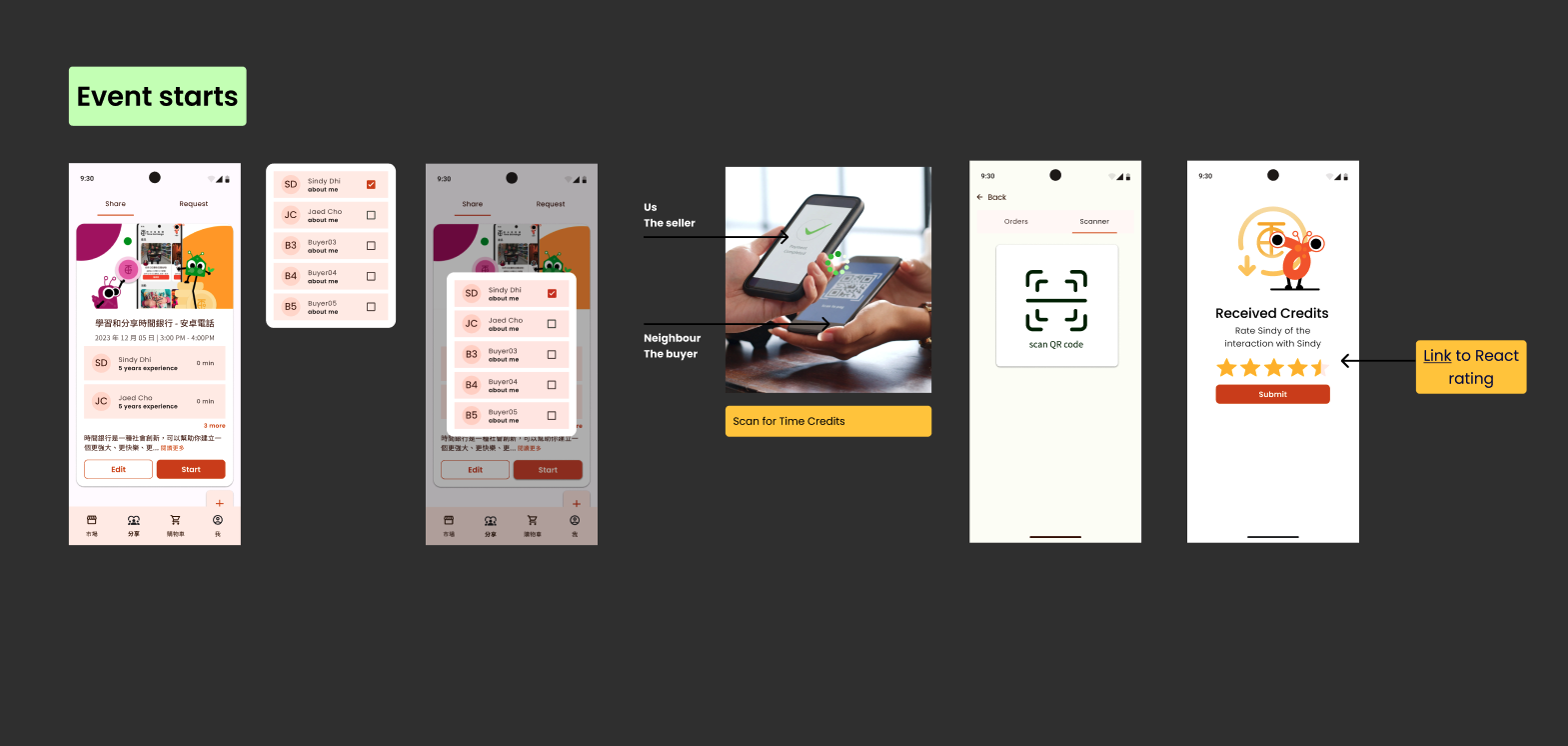
To ensure fair and transparent distribution of food assistance, we implemented a QR code-based coupon system, seamlessly integrated with the admin dashboard.
🔹 How It Works:
✅ Personalized QR Codes – Each user receives a unique QR code, limiting them to five coupons within a set period.
✅ Automated Tracking – The system tracks who has received coupons and who hasn’t, preventing duplicate claims.
✅ Farmer’s Market Integration – Users can redeem coupons at participating markets, ensuring fair access to fresh produce.
✅ Administrator Dashboard Analytics – All redemption data is collected in real-time, allowing NGOs to:
- Analyze demand and adjust coupon distribution accordingly.
- Identify patterns to optimize resource allocation.
- Encourage more NGOs to join, building a data-backed system for community support.
Why Web3? A Decentralized Approach to Community Support
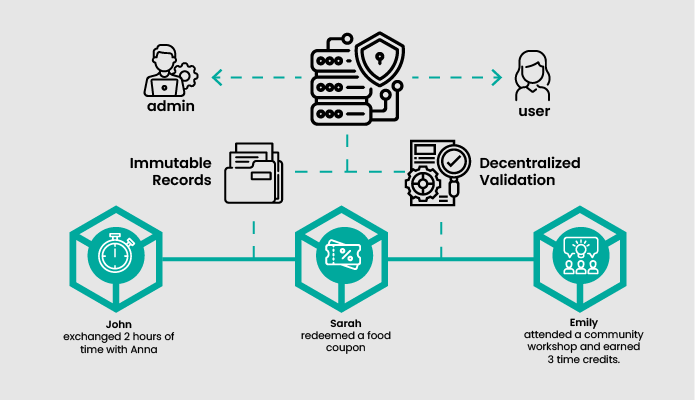
The decision to build this platform using Web3 technology was driven by a core mission: to create a transparent, secure, and community-driven system for time exchange and resource distribution.
🔹 How Web3 Strengthens the Platform:
✅ Decentralization – Ensures no single entity controls the system, fostering trust and fairness among NGOs and users.
✅ Transparency & Security – All transactions (time exchanges, coupon redemptions, and event participation) are recorded on-chain, preventing fraud and ensuring accountability.
✅ Smart Contracts – Automate key processes like coupon distribution, time exchange validation, and marketplace interactions, reducing administrative workload.
✅ Scalability for Multi-NGO Collaboration – Enables multiple NGOs to join the network, each managing their own impact while contributing to a shared ecosystem.
✅ Data Sovereignty – Users have control over their own data, ensuring privacy and ethical data management.


"By integrating Web3 technology, this project is more than just a time exchange platform—it’s a blueprint for scalable, transparent, and community-powered assistance, where NGOs and individuals can collaborate without centralized barriers to make a real impact."
Looking Ahead: Growing Community Impact in Hong Kong
With the launch of this platform in Hong Kong, we are continuously learning how users interact with it daily—gathering insights, refining features, and expanding accessibility.
Our goal is simple: to help more people within our community. Through this platform, we aim to empower NGOs, volunteers, and those in need by making time exchange and community support more accessible, transparent, and impactful.
At its core, this initiative is driven by a shared mission—a collective effort from multiple NGOs to create lasting change and improve lives through technology, collaboration, and community-driven solutions.
"This is just the beginning. By bringing NGOs together, harnessing the power of Web3, and prioritizing real user needs, we are building a future where community support is seamless, inclusive, and built for lasting impact."
Acknowledgments: A Collective Effort Towards Change
This project would not have been possible without the dedication and collaboration of our partners.
A heartfelt thank you to:
💡 The university and professors – For their guidance, insights, and expertise, which helped shape the platform.
💡 The tech team – For their commitment to bringing this vision to life, turning ideas into a working system.
💡 The NGOs and community members – For their invaluable feedback and participation, ensuring the platform serves those who need it most.
Your support has been instrumental in building a system that empowers people, fosters connection, and drives meaningful change.
💡 Final Thought:
"Together, we are creating a future where technology strengthens communities and makes a real difference in people’s lives. This is just the beginning."